
Setting up a compressed biogas project requires more than selecting technology and arranging finance. The CBG plant approvals in India normally span land use, pollution control, compressed-gas safety, fire safety, utilities, labour and factory compliance, feedstock handling, gas offtake and organic-manure marketing. The exact list is not identical for every project: it changes with the state, site, feedstock, plant capacity, water source, gas storage arrangement and method of selling CBG.
The practical approach is to create an approval matrix during feasibility, obtain construction-stage permissions before civil work, and align operating permissions with commissioning. This guide explains the sequence, responsible authorities, typical documents and common planning mistakes for Indian project developers in 2026.
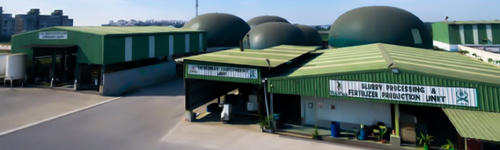
Which CBG Plant Approvals Are Required in India?
A typical commercial CBG project may require land and local-body permissions, Consent to Establish and Consent to Operate from the relevant Pollution Control Board, PESO approval for applicable compression and storage systems, fire clearance, electrical and factory-related approvals, and permission for groundwater extraction where applicable. GOBARdhan registration, gas offtake documentation and fertilizer compliance may also form part of the project pathway.
This is a planning guide, not a statutory opinion. Applicability, forms, fees, timelines and issuing authorities must be confirmed for the specific state and project configuration before investment or construction.
CBG Plant Approval Checklist by Project Stage
The following matrix helps developers understand when each approval should be examined. “Conditional” means that applicability depends on factors such as location, capacity, feedstock, storage, water source, workforce, boiler or electrical installation.
| Approval or registration | Typical authority | Planning stage | Applicability |
|---|---|---|---|
| Land title, land-use conversion and local development permission | Revenue, town-planning, industrial-development or local authority | Before final site commitment and construction | Project and state specific |
| Consent to Establish (CTE) | State Pollution Control Board or Pollution Control Committee | Before establishment or construction covered by the consent | Generally central to the environmental approval route |
| Consent to Operate (CTO) | State Pollution Control Board or Pollution Control Committee | Before commercial operation | Generally required where consent provisions apply |
| PESO approval or licence for filling and storage | Petroleum and Explosives Safety Organisation | Layout/equipment approval before installation; final licensing before operation | Based on compression, cylinder/cascade and storage arrangement |
| Fire NOC or fire-safety approval | State or local fire authority | Design stage and before operation, as prescribed | State, building and risk specific |
| Groundwater NOC | CGWA or competent state groundwater authority | Before extracting groundwater | Only where the proposed source and area require it |
| Factory, electrical, boiler and labour permissions | Respective state departments and inspectorates | During construction and before operation | Conditional on equipment, power system and workforce |
| GOBARdhan registration | Government of India unified registration system | Project development stage | Important where registration is linked to government support |
| FOM/LFOM compliance | Department of Fertilizers and relevant agriculture authorities | Before producing and marketing the product commercially | Depends on product route and applicable fertilizer rules |
1. Land, Location and Local Development Permissions
Land due diligence should happen before the plant capacity and layout are frozen. Verify title or lease rights, permitted land use, approach-road access, right of way, plot boundaries, flood risk, nearby habitation and sensitive receptors, and the availability of power and water. Agricultural land may require conversion for industrial use, while land in an industrial estate may follow a different approval route.
The layout should reserve space for feedstock receipt, pre-treatment, digesters, gas upgrading, compression and storage, utilities, digestate processing, fire access, internal vehicle movement, greenbelt and drainage. A land document alone does not prove that the proposed CBG activity can lawfully be developed on the plot.
2. Pollution Control Board Consent: CTE and CTO
Consent to Establish is normally addressed before the relevant construction and installation work begins. The application may require a project report, site plan, manufacturing or process description, water balance, effluent and emission details, waste-management plan, proposed pollution-control measures and land documents. The applicable category, consent conditions and supporting studies should be confirmed with the relevant State Pollution Control Board or Pollution Control Committee.
Consent to Operate is addressed when the project is ready for operation and must reflect the installed facility and compliance measures. A CTE does not replace CTO. Changes in capacity, feedstock, process, layout, emission source or waste stream should be assessed for amendment requirements rather than assumed to be covered automatically.
For MSW-based facilities, source segregation, removal of inerts, odour control, leachate management and digestate quality are especially important. The Government’s Advisory on CBG Plants Based on Municipal Solid Waste gives project-specific guidance on planning, safety and approvals for this feedstock route.
3. PESO Approval for CBG Compression and Storage
CBG becomes a compressed-gas safety matter when the project includes compression, filling, storage in cylinders or cascades, and associated high-pressure systems. PESO administers the applicable requirements under the Gas Cylinders Rules, 2016. Its published Form C is the application for grant, amendment or renewal of a licence to fill and/or store compressed gas in cylinders.
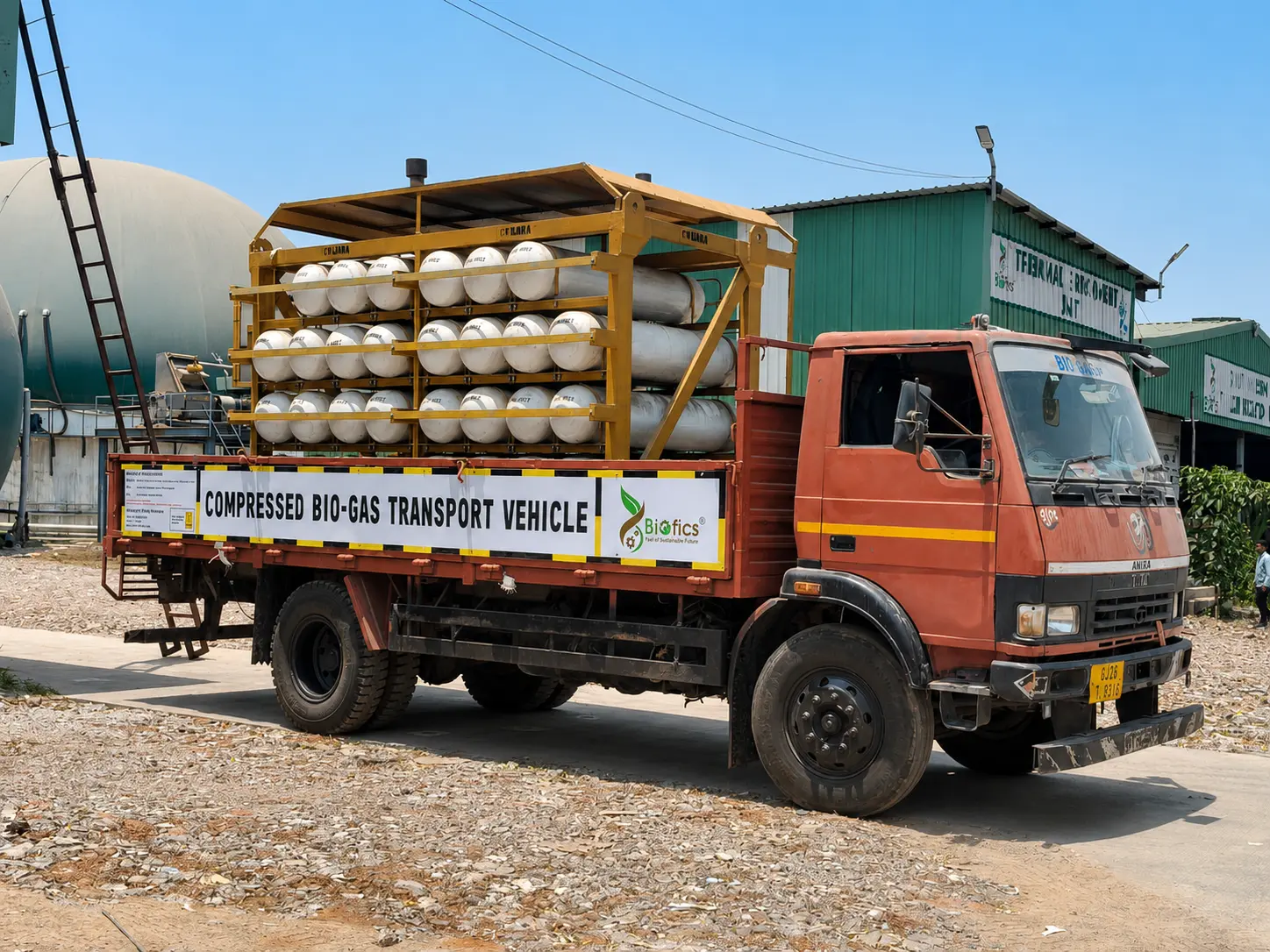
The project team should align the PESO layout with the final equipment arrangement before foundations, cascade areas and high-pressure piping are fixed. Equipment certificates, approved drawings, safety distances, hazardous-area electrical selection, pressure-relief arrangements and inspection records should be coordinated with the actual licence route. PESO also publishes current circulars, including guidance concerning CNG/CBG gas compressors proposed within premises covered under relevant Gas Cylinders Rules licences.
4. Fire, Electrical, Factory and Utility Permissions
Fire-safety requirements may cover access for emergency vehicles, hydrants or extinguishing systems, gas detection, emergency shutdowns, lightning protection, evacuation, signage and separation distances. The design basis should be discussed with the competent fire authority because state rules and building classifications differ.
Electrical approval may involve the electrical inspector, distribution company, sanctioned load, transformer or substation installation, earthing, lightning protection and hazardous-area compliance. Boiler registration applies only if the project installs equipment covered by the applicable boiler law. Factory registration or licence and labour compliances similarly depend on the state law, process and employment profile.
If groundwater will be extracted, determine whether the competent authority is the Central Ground Water Authority or a state authority. The official groundwater NOC portal provides separate application routes for industrial and infrastructure projects. Water availability should not be assumed merely because a borewell can be drilled.
5. GOBARdhan Registration, Gas Offtake and Product Compliance
The GOBARdhan registration guidance states that a plant seeking benefits or support from other ministries or departments must obtain a registration number through the portal. Developers should distinguish this registration from statutory construction and operating permissions: registration does not replace CTE, CTO, PESO or local approvals.
The gas-sale route must also be developed in parallel. An OMC or CGD expression of interest, letter of intent, commercial agreement, pipeline-injection arrangement or cascade-delivery plan is a commercial linkage—not a substitute for a statutory licence. Quality testing, metering, compression responsibility, delivery pressure, receiving point and transport distance should be defined before the financial model is finalized.
Digestate cannot be treated as automatic revenue. If fermented organic manure or liquid fermented organic manure will be marketed, the project must plan testing, quality consistency, processing, storage, packaging, licensing or authorization, and sale documentation under the applicable fertilizer framework. Until a compliant market route is demonstrated, manure income should remain a conservative assumption.
Documents Commonly Required for CBG Plant Approvals
The exact document list differs by authority, but a controlled project data room should usually include the following:
- Entity incorporation documents, PAN, GST details and authorization of the signatory.
- Registered land title or lease, land-use record, survey details and access documents.
- Site coordinates, location map, contour or survey drawing and approved plant layout.
- Detailed project report, process description, design basis and mass balance.
- Feedstock types, quantities, test results, sourcing agreements and seasonal supply plan.
- Water balance, power requirement, effluent plan, air-emission details and waste streams.
- Equipment list, pressure-system data, P&IDs, hazardous-area classification and safety philosophy.
- Fire-fighting design, emergency response plan and risk-assessment documents where required.
- CBG offtake or forward-linkage documents and the proposed delivery arrangement.
- Digestate, FOM and LFOM processing, testing, storage and marketing plan.
Illustrative Approval Planning Framework
Consider an illustrative commercial project using mixed organic feedstock and delivering CBG through cascades. Before purchasing equipment, the developer should complete land-use checks, feedstock testing, preliminary mass balance and a concept layout. That information supports CTE planning and identifies whether groundwater, factory, electrical, fire and PESO routes apply.
During detailed engineering, the team should freeze the safety layout, equipment data and utility requirements before submitting or finalizing authority drawings. Before commissioning, it should close installation records, inspections, CTO requirements, operating licences, gas quality verification and commercial dispatch documentation.
This example describes sequencing only. It does not estimate approval time or guarantee that applications can run in parallel. Timelines depend on application quality, authority queries, inspections, site readiness and state procedures.
Step-by-Step CBG Approval Process
- Define the project basis. Record feedstock, daily quantity, target CBG capacity, process route, water source, power load, digestate route and gas-delivery model.
- Complete site due diligence. Verify title, land use, access, setbacks, local development rules, utilities and surrounding receptors before committing major capital.
- Create an applicability matrix. List every approval, authority, legal basis, owner, prerequisite, submission date, query status and renewal condition.
- Prepare one controlled design package. Keep capacity, layout, equipment list, mass balance and utility figures consistent across the DPR and applications.
- Submit pre-construction applications. Address land, CTE, building or local permissions and preliminary safety requirements before work covered by those approvals begins.
- Integrate approval conditions into engineering. Convert every condition into a drawing note, procurement specification, construction activity or operating procedure.
- Maintain inspection-ready records. Preserve test certificates, invoices, equipment approvals, photographs, calibration records, as-built drawings and commissioning reports.
- Close operating permissions. Coordinate CTO, final PESO or fire requirements, electrical inspection, product compliance and dispatch documents before commercial operation.
- Track renewals and changes. Create a compliance calendar and reassess approvals before expanding capacity or changing feedstock, storage or process configuration.
Common Approval Mistakes That Delay CBG Projects
- Buying land before checking permitted use: ownership does not resolve zoning, access, setback or conversion issues.
- Copying another plant’s checklist: a press-mud plant, MSW plant and energy-crop project can have different risks and permission pathways.
- Starting civil work before approval alignment: later changes to safety distance or equipment placement can cause redesign and rework.
- Using inconsistent figures: different capacities, water consumption or feedstock quantities across the DPR, CTE and drawings invite queries.
- Treating registration as a licence: GOBARdhan registration and an offtake LOI do not replace statutory consents.
- Ignoring the digestate route: storage, treatment and compliant marketing must be planned alongside gas production.
- Leaving approvals entirely to the end: final inspections depend on decisions made during layout, procurement and installation.
How Biofics Helps with CBG Project Development
Biofics supports developers from feedstock and site assessment through process design, engineering, project execution and commissioning. Its turnkey Bio-CNG plant solutions connect biological design, gas purification, compression, utilities and digestate handling within one coordinated project basis.
Developers can also review Biofics resources on how to start a CBG plant in India, CBG plant cost planning and CBG plant subsidy eligibility. For licensing support, the first useful step is to share the site state and district, land status, feedstock, proposed capacity, water source, storage configuration and gas offtake route.
Planning a CBG Plant Approval Roadmap?
Share your site, feedstock, target capacity and gas-delivery plan with Biofics for a preliminary project and approval discussion.
Frequently Asked Questions
What are the main CBG plant approvals in India?
The main CBG plant approvals in India commonly include land-use and local permissions, Pollution Control Board CTE and CTO, PESO approval for applicable compressed-gas filling and storage, fire clearance, and conditional factory, electrical, boiler and groundwater permissions. GOBARdhan registration, gas offtake documentation and fertilizer compliance may also be needed.
Is PESO approval mandatory for every CBG plant?
PESO applicability depends on the actual compression, filling, cylinder or cascade storage and dispensing arrangement. A commercial plant handling CBG at high pressure should assess the applicable Gas Cylinders Rules approval and licence route during layout design. The competent authority or qualified licensing professional should confirm the precise form and conditions.
What is the difference between CTE and CTO?
Consent to Establish is addressed before setting up the facility or undertaking work covered by the consent. Consent to Operate is obtained when the installed plant is ready to operate under specified conditions. The CTO application should match the approved and constructed project; CTE alone does not authorize commercial operation.
Does GOBARdhan registration replace pollution or PESO approval?
No. GOBARdhan is a unified project registration pathway and can be important for accessing support from government departments. It does not replace State Pollution Control Board consents, PESO licensing, fire permissions, land approvals or any other statutory requirement applicable to the project.
Is environmental clearance required for a CBG plant?
Environmental-clearance applicability should be examined for the specific project, feedstock, location and linked activities under the prevailing notification and state process. Developers should not assume that every CBG plant automatically requires it—or that none do. Record the formal applicability assessment in the project’s approval matrix.
Is a groundwater NOC required for a CBG plant?
It may be required when the project proposes to extract groundwater, depending on the competent authority, location, assessment category, quantity and exemptions in force. If water will come from a municipal, industrial-estate or other surface supply, retain the allocation or supply documentation instead of treating water availability as an assumption.
Which documents are needed for PESO approval?
The exact list depends on the licence route, but it may include the site and safety layout, equipment and cascade specifications, approved certificates, high-pressure piping information, safety distances, pressure-relief and fire-protection details, and authorization documents. Final requirements should be checked against the current PESO rules, forms and circulars.
Can CBG plant construction start while approvals are pending?
Construction should not begin merely because applications have been filed. The developer must identify which permissions are required before land development, civil work, equipment installation or operation and follow their conditions. Starting early can create rework if an authority requires changes to layout, storage, drainage, access or safety systems.
How long do CBG plant approvals take?
There is no dependable universal duration. Time depends on the state, application type, project complexity, completeness of documents, authority queries, inspection scheduling and site readiness. A realistic programme should include dependencies and response time rather than one combined promise for all licences.
Conclusion
A reliable strategy for CBG plant approvals in India begins before equipment procurement. Confirm land and feedstock feasibility, build a project-specific applicability matrix, keep the DPR and drawings consistent, and translate every approval condition into engineering and construction actions. Developers planning a project can then coordinate finance, licensing, EPC and commissioning around one controlled project basis.