
A 5 TPD CBG plant setup in India is a commercial-scale project designed to produce about five tonnes of purified and compressed biogas per day. This is the gas output—not the daily feedstock input. A dependable project therefore begins with feedstock testing, land due diligence, approvals, gas offtake planning and an operating strategy before equipment is ordered.
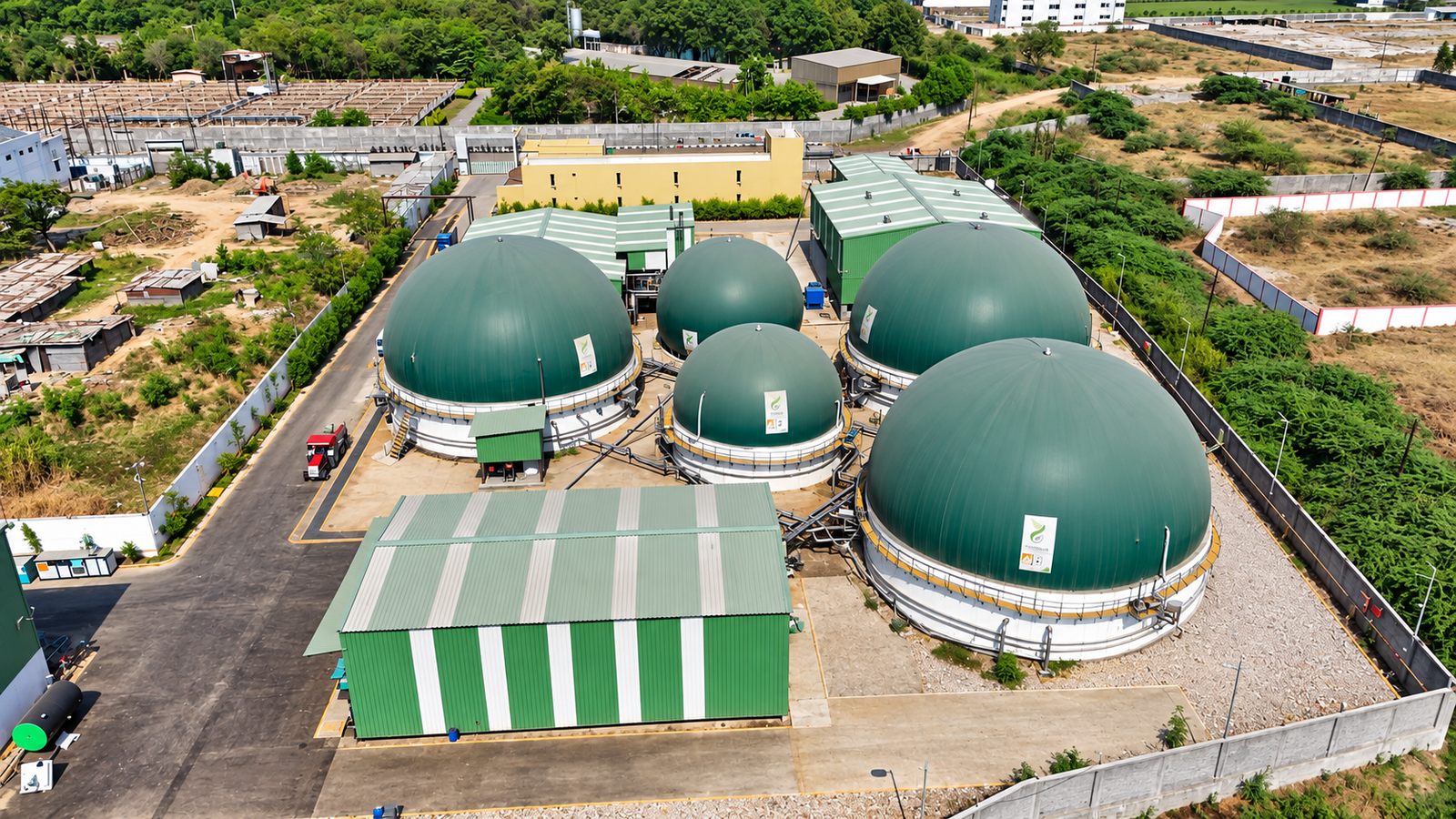
This practical guide explains the land, feedstock, equipment, cost heads, approvals, implementation stages and profitability drivers for a 5 TPD plant. To connect the planning principles with an operating project, we will use our Raiyani Greensphere 5 TPD Bio-CBG plant in Rajkot, Gujarat as a real-world example throughout the guide.
Planning note: Figures in this article are planning guidance, not a project quotation. Final capacity, investment and output must be established through feedstock tests, site conditions, mass balance and detailed engineering.
What Does a 5 TPD CBG Plant Mean?
In this context, 5 TPD means a target output of five tonnes of saleable CBG every day. The organic material required to produce that gas will be much higher and changes with moisture, volatile solids, methane potential, contamination, seasonal quality and plant efficiency.
For example, the Rajkot project combines locally available organic inputs rather than relying on a single theoretical conversion factor. This illustrates why a 5 TPD design must be based on tested feedstock and an annual supply plan—not only on biomass claimed to be available in a district.
5 TPD CBG Plant at a Glance
| Decision area | What must be established |
|---|---|
| Target output | Approximately 5 tonnes/day of compliant, saleable CBG |
| Feedstock | Tested methane potential, recoverable daily quantity and seasonal security |
| Land | Process layout, storage, utilities, digestate area, roads, greenbelt and setbacks |
| Core process | Pre-treatment, anaerobic digestion, gas cleaning, upgrading and compression |
| Revenue | CBG sales; manure or tipping income only where verified |
| Main risks | Feedstock shortfall, biology instability, downtime, offtake mismatch and digestate disposal |
How Much Feedstock Is Required for a 5 TPD CBG Plant?
There is no universal input-to-output ratio. High-moisture cattle dung contains less usable organic matter per wet tonne than some agro-industrial residues. Fibrous energy crops may need size reduction and pre-treatment, while food waste can digest quickly but may destabilise the biology if loading changes suddenly.
A credible assessment should:
- Map suppliers within an economical collection radius.
- Collect representative samples across seasons.
- Test total solids, volatile solids, pH, contaminants and biochemical methane potential.
- Account for storage, transport and processing losses.
- Build daily, monthly and annual mass balances.
- Separate contracted supply from probable or opportunity supply.
Which Feedstocks Work for a 5 TPD Plant?
- Cattle dung: biologically stable but dilute; collection distance and consistency matter.
- Napier grass and crop biomass: potentially reliable when cultivated under a controlled plan, but chopping, storage and fibre management are important.
- Press mud: energy rich and concentrated near sugar mills, but seasonal storage must be designed.
- Food and potato-processing waste: often readily digestible, although composition and acidity can vary.
- Segregated wet waste: regularly generated but requires contamination removal and odour control.
- Poultry litter: nutrient rich but ammonia risk may require controlled blending.
Co-digestion can balance nutrients and seasonal availability, but the recipe must be validated. Changing the mix without biological controls can reduce gas yield even when total input tonnage looks adequate.
Land Requirement and Site Selection
Land requirement cannot be decided from gas output alone. It depends on feedstock storage days, digester system, purification and compression blocks, cascade movement, utility buildings, flare, digestate handling, internal roads, stormwater drainage, greenbelt and statutory setbacks.
Before buying or leasing a site, verify clear title or a bankable long-term lease, permitted land use, all-weather road access, power and water availability, flood level, soil bearing capacity, nearby habitation and space for safe movement and future expansion.
Major Equipment in a 5 TPD CBG Plant
1. Feedstock Reception and Pre-Treatment
Depending on the input, this may include a weighbridge, unloading platform, storage bunker, conveyors, shredders, pulpers, magnetic separation, grit removal, slurry preparation and equalisation.
2. Anaerobic Digestion
Digesters maintain controlled conditions for microorganisms to convert organic matter into raw biogas. Sizing depends on organic loading, retention time, solids, temperature and mixing. Heating, recirculation, instrumentation and overflow management must be included.
3. Raw Gas Handling and Safety
Gas holders, blowers, condensate traps, flame arrestors, pressure controls and an emergency flare help stabilise flow and maintain safe operation.
4. Gas Cleaning, Upgrading and Compression
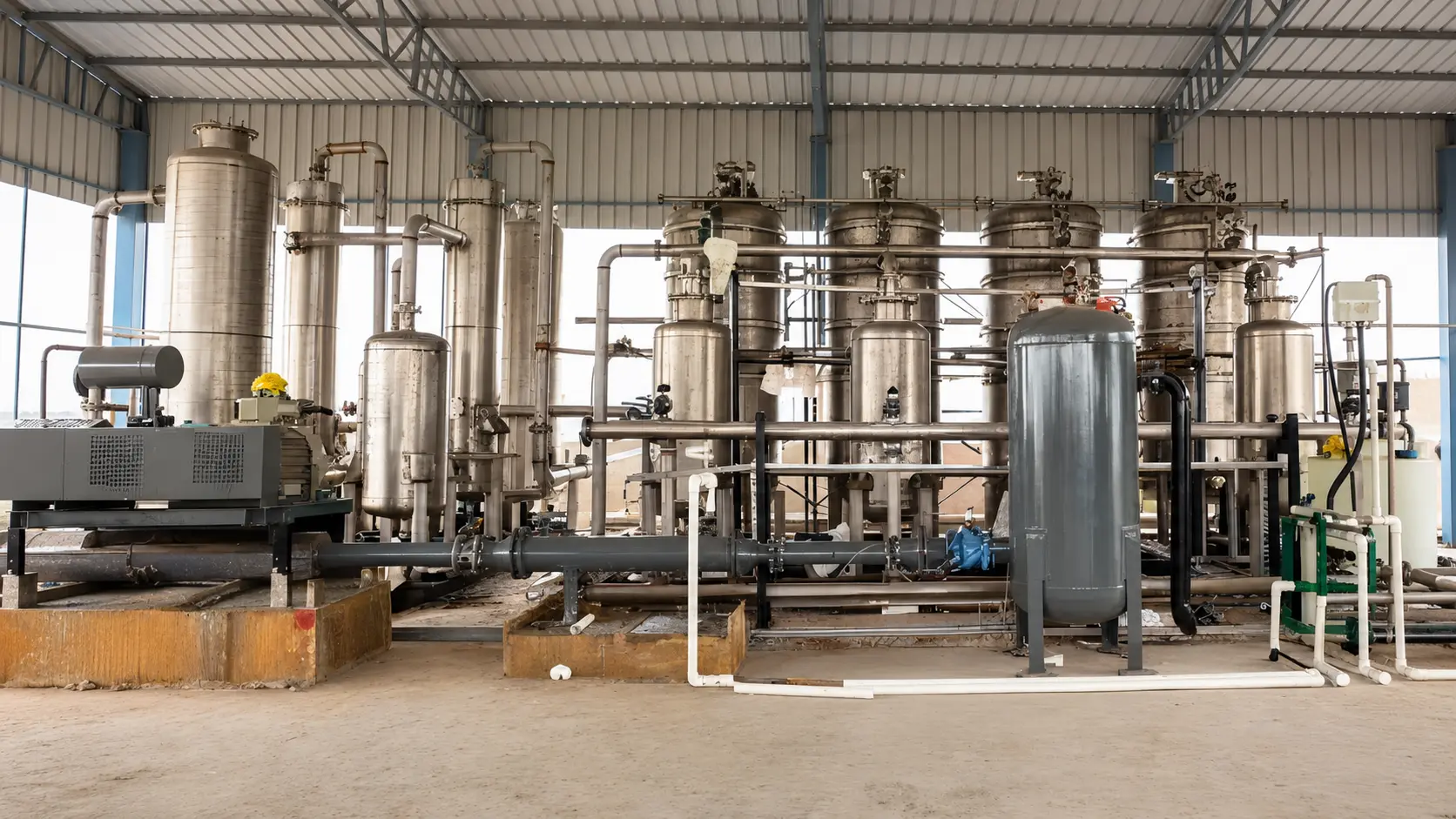
Raw biogas contains methane, carbon dioxide, hydrogen sulphide, moisture and trace impurities. A suitable upgrading system—such as VPSA, membrane or water scrubbing—must consistently meet the buyer’s gas specification. The compressor, metering, cascades and loading arrangement should be planned with the offtake route and PESO requirements.
5. Digestate Management
Digestate may need solid-liquid separation, curing, drying, storage, laboratory testing and compliant marketing. Manure revenue should not be included at an optimistic value until product quality and actual buyers are demonstrated.
5 TPD CBG Plant Cost in India
A reliable price cannot be quoted from capacity alone. Capital cost changes with feedstock, site development, digester volume, storage, pre-treatment, upgrading technology, compression, automation, utilities, digestate systems, taxes and financing.
A complete estimate should cover land and development; civil works; feedstock machinery; digesters and gas holders; gas upgrading and compression; cascades; digestate processing; electricals and automation; fire and safety systems; laboratory and utilities; engineering; approvals; commissioning; contingency; interest during construction; and working capital.
Compare vendors through a scope matrix. A low headline quote may exclude roads, storage, grid connection, gas transportation equipment, digestate treatment, taxes or performance guarantees.
Operating Cost and ROI Drivers
Major operating costs include delivered feedstock, collection and transport, electricity, labour, consumables, water, testing, maintenance, spares, insurance, digestate handling and cascade logistics. The financial model should include ramp-up time, planned shutdowns and backup feedstock—not only ideal full-capacity operation.
Returns depend mainly on achieved CBG yield, plant availability, feedstock cost, gas sale terms, compression power, logistics, finance cost and verified manure demand. Build downside, base and upside cases instead of relying on a single payback figure.
Approvals Required
The matrix varies by state and site, but commonly includes land-use and local permissions, Consent to Establish and Consent to Operate, fire approval, electrical and factory permissions, groundwater clearance where applicable, and PESO approvals for compressed-gas storage and filling. GOBARdhan registration, offtake documentation and fertilizer compliance may also apply.
Approval conditions should be integrated before the plant layout and civil foundations are frozen. See the CBG plant approval checklist for a stage-wise overview.
Implementation Roadmap
- Pre-feasibility: validate feedstock, land, utilities, offtake and digestate routes.
- Testing and mass balance: establish input characteristics and realistic gas output.
- DPR and finance: define scope, capex, opex, revenue, risks and funding.
- Approvals and engineering: align statutory conditions, process, layout and safety.
- Procurement and construction: manage interfaces across civil, mechanical, electrical and automation packages.
- Commissioning: complete dry trials, wet trials, biological start-up and gas-quality testing.
- Ramp-up: increase loading gradually, train the team and document operating limits.

Case Study: Rajkot 5 TPD Bio-CBG Plant
The Raiyani Greensphere Corporation plant in Rajkot, Gujarat provides a useful operating example for developers evaluating a 5 TPD project. The value of this example is not that every project should copy its numbers, but that planning, execution, biological stability and continued support must work together after commissioning.
| Location | Rajkot, Gujarat |
|---|---|
| Rated CBG output | 5 TPD |
| Listed feedstock input | Approximately 120 TPD |
| Feedstock mix | Napier grass, cow dung and potato waste |
| Operational milestone | 325 operational days in the first year, as discussed by the plant owner |
What the Rajkot Example Teaches
- Operations matter as much as construction: a commissioned plant still needs disciplined feedstock management, preventive maintenance and trained operators.
- Consistent supply is a design input: multiple feedstocks can improve flexibility, provided the recipe and logistics are controlled.
- Availability is a key KPI: 325 operational days is more meaningful than nameplate capacity alone because revenue depends on actual running days.
- Support continues after start-up: biological stabilisation, troubleshooting and performance monitoring influence first-year results.
- Capacity must be proven: the owner’s account notes that the plant sometimes performed above rated output, showing the importance of stable operations rather than only theoretical projections.

Watch: 325 Operational Days at the Rajkot Bio-CBG Plant
In this Biofics discussion, the Raiyani Greensphere plant owner shares the operational journey, practical challenges and the factors behind consistent performance at the 5 TPD Rajkot facility.
Common Mistakes to Avoid
- Confusing 5 TPD feedstock input with 5 TPD CBG output.
- Sizing from theoretical biomass instead of recoverable, contracted supply.
- Buying land before access, zoning, drainage and setback checks.
- Comparing EPC quotations with different exclusions.
- Freezing equipment before feedstock testing.
- Ignoring seasonal storage, monsoon logistics and digestate markets.
- Underestimating biological ramp-up, maintenance and working capital.
How Biofics Can Help
Biofics supports CBG developers with feedstock assessment, process design, detailed engineering, project execution, commissioning and operational support. Its turnkey Bio-CNG plant solutions integrate feed preparation, digestion, purification, compression and digestate handling around one project basis.
Planning a 5 TPD CBG Plant?
Share your location, feedstock type and quantity, land status and proposed gas offtake route with Biofics for a preliminary project discussion.
Conclusion
A successful 5 TPD CBG plant setup in India begins with feedstock and market validation—not equipment purchase. Test material across seasons, secure supply and offtake, build an approval-linked layout, compare complete vendor scopes and budget for biological ramp-up. The Rajkot plant’s 325 operational days show why daily operating discipline and long-term support are the real bridge between installed capacity and saleable gas.
Frequently Asked Questions
How much does a 5 TPD CBG plant cost in India?
There is no responsible fixed price without a site-specific scope. Cost depends on feedstock preparation, digester volume, civil work, upgrading technology, compression, storage, utilities, digestate management, approvals and financing. A DPR and comparable vendor scope are required for a credible estimate.
How much land is required for a 5 TPD CBG plant?
Land depends on storage days, plant layout, utilities, vehicle circulation, digestate processing, greenbelt and safety setbacks. Prepare a concept layout before finalising the land.
How much feedstock is required to produce 5 TPD CBG?
The quantity varies by feedstock quality and process efficiency. As a real example, Biofics lists approximately 120 TPD input for the Rajkot 5 TPD plant, but another project may require a different tonnage. Testing and mass balance are essential.
Which feedstock is best for a 5 TPD CBG plant?
The best feedstock is not simply the one with the highest laboratory gas yield. It should be consistently available, economically collectable, processable and supported by a safe storage plan. Many projects use a validated co-digestion mix.
What approvals are required for a 5 TPD CBG project?
Requirements usually include land and local permissions, pollution-control consents, fire and electrical approvals, and PESO permissions for compressed-gas systems. State, water, factory, GOBARdhan, offtake and fertilizer requirements should be checked for the specific project.
Is subsidy or financing available for a 5 TPD CBG plant?
Eligibility depends on the scheme, applicant, technology, project stage and current guidelines. Treat incentives only after written eligibility is confirmed, and build the base financial model without assuming uncertain support.
How long does it take to set up a 5 TPD CBG plant?
The schedule depends on land readiness, approvals, engineering, equipment lead times, civil conditions and biological ramp-up. A dependency-based project programme is more reliable than a generic month estimate.
Is a 5 TPD CBG plant profitable?
It can be commercially viable when feedstock cost, gas yield, plant availability, offtake terms, logistics and financing are aligned. Run downside, base and upside scenarios and do not rely on unverified manure revenue.
What equipment is needed for a 5 TPD CBG plant?
Typical systems include feedstock reception and pre-treatment, digesters, mixing and heating, gas holders, cleaning and upgrading, compression and storage, flare and safety devices, automation, utilities and digestate processing.
Why is the Rajkot plant relevant to a new 5 TPD project?
It provides an operating reference at the same rated output. Its feedstock mix and 325 operational-day milestone highlight the importance of supply planning, stable biology, maintenance, trained operators and post-commissioning support.