
BIO CNG FEEDSTOCK REFERENCE
Start with what arrives every day.
Indicative biomethane yields help frame initial project feasibility. Final Bio-CBG plant design uses representative feedstock testing, seasonal availability analysis, and defined operating regimes.
| Feedstock | Indicative biogas potential | Indicative Bio-CNG potential | Design priority |
|---|---|---|---|
| Cattle dung | 40–60 m³/tonne | 15–20 kg/tonne | Slurry consistency |
| Food waste | 120–140 m³/tonne | 45–55 kg/tonne | Contaminant removal |
| Press mud | 100–110 m³/tonne | 35–40 kg/tonne | Seasonal storage |
| Napier grass | 110–130 m³/tonne | 40–45 kg/tonne | Size reduction |
| MSW organic fraction | 70–90 m³/tonne | 25–30 kg/tonne | Segregation quality |
Indicative industry reference ranges only. Actual output depends on feedstock composition, volatile solids, pre-treatment, retention time and operating conditions.
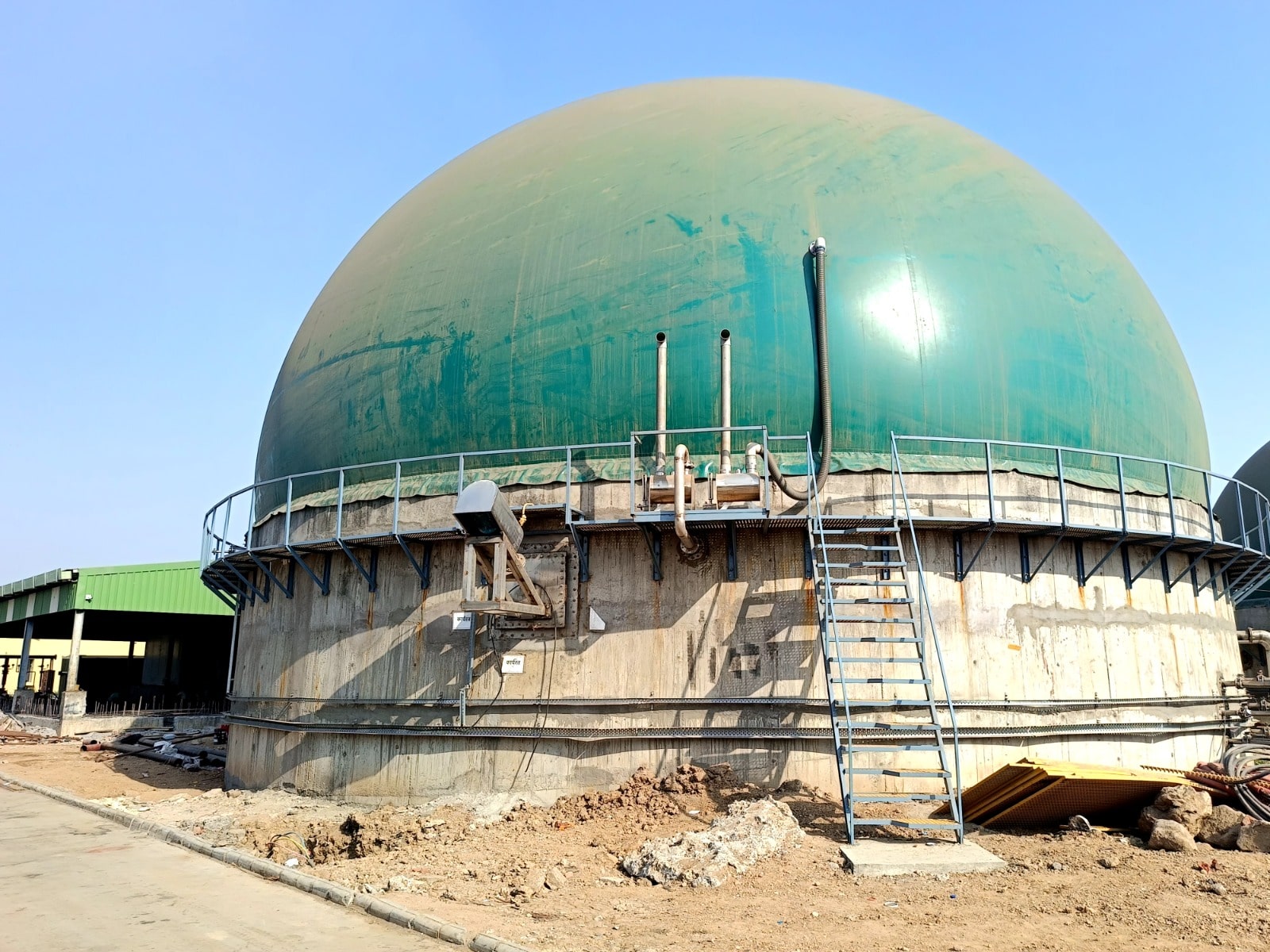
Purification that protects value
Bio CNG Gas Quality Is Engineered—Not Assumed.
As a leading Biogas Upgradation Plant Manufacturer, we select the purification train around raw-gas composition, required methane recovery, IS 16087 purity specifications, and project operating economics.
Moisture and H₂S management
Protect downstream compression equipment and separation media by removing H₂S and moisture to stabilise raw biogas.
Integrated VPSA Biogas Upgrading
Separate CO₂ and trace impurities using high-efficiency Vacuum Pressure Swing Adsorption (VPSA) for high methane recovery.
Bio-CBG Product Verification
Continuous monitoring of methane purity, dew point, and operating pressure prior to cascade compression and dispatch.
TURNKEY CBG EPC RESPONSIBILITY
From Opportunity to Operating Bio CNG Asset
A structured delivery framework eliminates interface risks between civil construction, equipment integration, biological inoculation, and operational handover.
Feasibility
Feedstock, land, utilities, logistics, outputs and commercial constraints.
Engineering
Process basis, mass balance, plant layout, equipment and project interfaces.
Build & commission
Manufacturing, installation coordination, cold trials, inoculation and ramp-up.
Operate & support
Training, monitoring, maintenance planning and performance improvement.