
CBG plant subsidy in India changed materially in August 2026 when the Union Cabinet approved capital assistance of up to ₹2 crore per tonne per day (TPD) of installed CBG capacity for eligible greenfield projects under the unified GOBARdhan scheme. Brownfield projects that expand production capacity are also eligible. However, “up to” describes a ceiling—not an automatic grant, entitlement or confirmed deduction from project cost. Registration, detailed eligibility, appraisal, eligible expenditure and sanction will depend on the notified implementation framework.
This guide explains what the official announcement confirms, what remains subject to detailed guidelines, how developers should calculate the headline ceiling, and which documents should be prepared without inventing an application process.
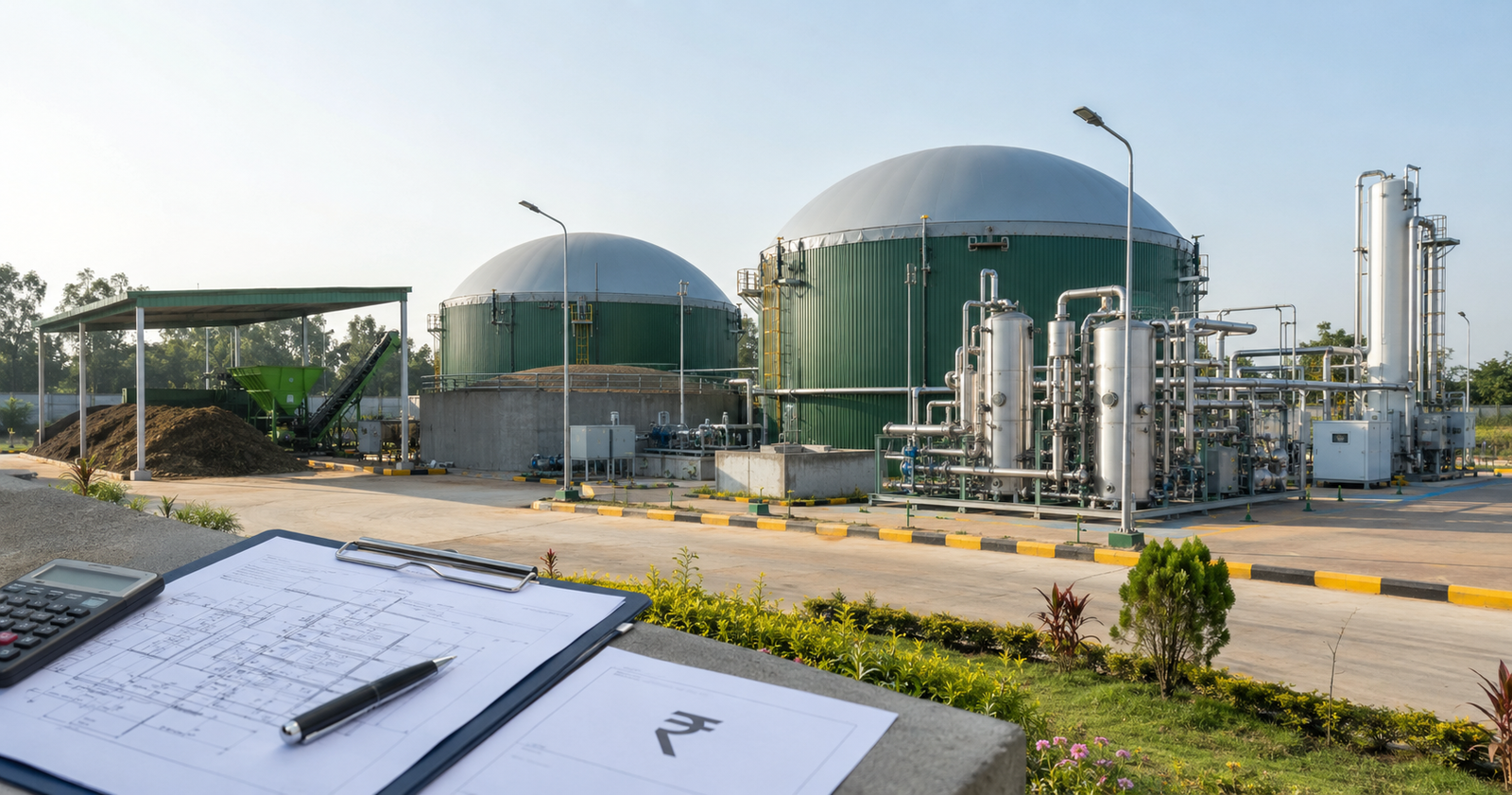
What Is the CBG Plant Subsidy in India in 2026?
The benefit commonly called the “CBG subsidy 2026” is described by the Government as capital assistance of up to ₹2 crore per TPD for eligible greenfield CBG projects. The official announcement also says support extends beyond core machinery to critical assets for feedstock aggregation, organic-manure processing and value addition.
The Press Information Bureau’s GOBARdhan scheme explainer confirms both the ceiling and the inclusion of eligible brownfield capacity expansion. For the wider policy context, including pricing and pipeline support, read Biofics’ guide to the GOBARdhan Scheme 2026.
Important: A project’s installed capacity multiplied by ₹2 crore gives only the maximum headline ceiling. It does not establish the eligible project cost, approved assistance, sanction date or disbursement amount.
How Much Assistance Could a 3, 5 or 10 TPD CBG Plant Receive?
The basic illustrative formula is: installed CBG capacity in TPD × up to ₹2 crore per TPD. The table below applies only the headline ceiling stated in the Cabinet announcement.
| Illustrative installed capacity | Ceiling calculation | Headline maximum |
|---|---|---|
| 3 TPD | 3 × ₹2 crore | Up to ₹6 crore |
| 5 TPD | 5 × ₹2 crore | Up to ₹10 crore |
| 10 TPD | 10 × ₹2 crore | Up to ₹20 crore |
Illustrative calculations only: These figures are neither Biofics quotations nor subsidy estimates. Actual assistance may be lower or unavailable after applying the final definitions, eligible-cost rules, caps, appraisal conditions, cut-off dates, funding availability and sanction terms.
Why a 5 TPD Plant Should Not Simply Subtract ₹10 Crore from CAPEX
A developer may see “subsidy for 5 TPD CBG plant” and reduce the finance requirement by ₹10 crore. That is unsafe. The project must first establish its qualifying installed capacity and eligible cost, and then satisfy the applicable approval and disbursement conditions. Until assistance is formally sanctioned, lenders may assess the project on a more conservative basis.
Subsidy also does not determine total investment. Feedstock type, pre-processing, digestion technology, gas upgrading, storage, manure handling, utilities and site development drive the actual CBG plant cost in India.
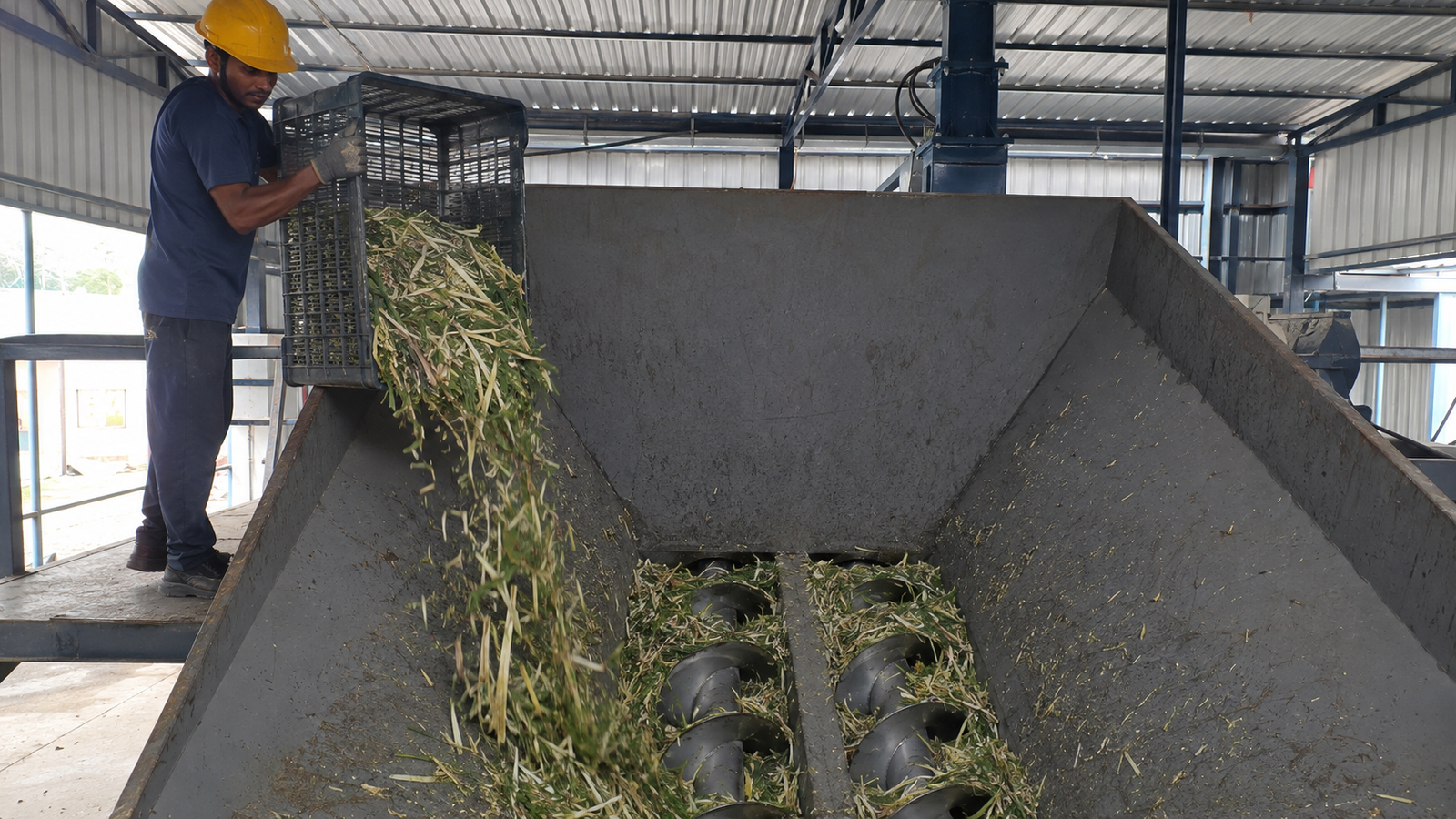
Who May Be Eligible for GOBARdhan Capital Assistance?
The August 2026 official release establishes two broad project categories, but it does not by itself publish every qualifying condition.
| Project category | What the announcement confirms | What still needs detailed rules |
|---|---|---|
| Greenfield | Eligible new CBG projects may receive up to ₹2 crore per TPD of installed capacity. | Cut-off dates, eligible expenditure, appraisal, commissioning and disbursement conditions. |
| Brownfield | Existing projects expanding CBG production capacity will also be eligible. | Whether assistance applies only to incremental capacity, baseline evidence and eligible expansion assets. |
Accordingly, a brownfield operator should document existing nameplate capacity, actual operating history, proposed incremental capacity and separate expansion costs. The announcement should not be read as support for old capacity that is not being expanded.
Is GOBARdhan Registration the Same as a Subsidy Application?
No. GOBARdhan registration records a plant or proposed project in the Government’s unified registration system. It does not, by itself, constitute a capital-assistance application, appraisal, approval, sanction or payment.
The Ministry of Jal Shakti’s GOBARdhan Unified Registration Portal now directs CBG applicants to the dedicated CBG registration route. Developers should retain the registration acknowledgement and keep project information consistent across the portal, DPR, lender submission and approval applications. Registration is an important project record, but sanction must be evidenced by a separate official approval under the applicable guidelines.
Is the CBG Subsidy Application Process Available Yet?
As of 22 August 2026, the official Cabinet and PIB material reviewed for this article confirms the scheme architecture and headline support, but does not provide a complete operational manual for this capital-assistance component. It does not specify a final application window, appraisal authority, eligible-cost formula, milestone sequence or disbursement procedure.
Therefore, claims that every applicant must follow a particular portal sequence or will receive assistance after a fixed number of days should be treated cautiously unless supported by subsequently notified guidelines. The practical path today is application readiness, not pretending that an unnotified procedure is final.
Application-Readiness Steps for a CBG Developer
- Define the project: establish location, legal entity, feedstock, proposed installed CBG capacity and whether it is greenfield or brownfield expansion.
- Complete GOBARdhan registration: enter accurate project information and preserve the acknowledgement; do not describe this as subsidy sanction.
- Build the technical case: prepare feedstock assessment, mass balance, process design, equipment scope, project schedule and a bankable DPR.
- Secure project rights: document land title or lease, feedstock arrangements, water and power availability, access and proposed gas offtake route.
- Map approvals: identify applicable pollution-control, factory, fire, PESO, local-body, electrical and other project-specific permissions.
- Separate costs: distinguish core plant, feedstock aggregation, manure-processing, value-addition and brownfield expansion costs so that future eligible-cost tests can be applied.
- Monitor official notifications: apply only through the authority and format specified in final guidelines, and obtain written sanction before treating assistance as committed finance.
Practical Documents Checklist for CBG Subsidy Readiness
The final mandatory list must come from notified scheme guidelines. Meanwhile, the following evidence is useful for technical appraisal, lender diligence and most government applications.
- Certificate of incorporation or entity-registration documents, PAN, GST and authorised-signatory records
- Udyam registration where MSME status is being claimed
- GOBARdhan registration acknowledgement and consistent plant details
- Land title, registered lease or lawful allotment; site plan and access records
- Detailed Project Report with capacity basis, technology, CAPEX, OPEX, implementation schedule and financial model
- Feedstock survey, laboratory characteristics where relevant, seasonality analysis and supply MoUs or agreements
- Process flow, mass and energy balance, equipment list, technical quotations and layout
- Proof of promoter contribution, net-worth information, audited financials and proposed debt structure
- Gas offtake or evacuation evidence, such as an LoI, agreement or documented CGD/OMC engagement where applicable
- Consent to Establish and status of other statutory approvals applicable to the site and configuration
- For brownfield projects: existing capacity, commissioning and production evidence, plus a ring-fenced expansion scope and cost
- Declarations on other central or state assistance, related-party procurement and any information required to prevent duplicate claims
How Does the Up to 85% MSME Credit Guarantee Work?
The unified scheme announcement provides a dedicated credit-guarantee mechanism with coverage of up to 85% on eligible loans for eligible MSME-based CBG projects. This is a guarantee to reduce a lender’s covered credit risk; it is not an 85% cash subsidy, an 85% loan waiver or automatic loan approval.
The official qualification appears in the PIB description of the credit-guarantee component. Project viability, MSME qualification, eligible lender and loan, promoter contribution, appraisal and guarantee terms will still matter. Developers should also avoid assuming that the new CBG-specific mechanism is identical to the general CGTMSE scheme unless final rules explicitly connect them.
Can Central and State CBG Incentives Be Combined?
Possibly, but never assume automatic stacking. State industrial, bioenergy or MSME policies may offer capital support, interest subsidy, electricity-duty relief, stamp-duty reimbursement or other incentives. Availability depends on the project’s state, location category, entity, investment period, eligible fixed capital investment and commencement milestones.
Before including both central and state benefits in a financial model, obtain the current state notification and check its anti-duplication, maximum-assistance and same-asset clauses. If two schemes support the same equipment cost, one authority may reduce or prohibit the overlapping benefit. Show each incentive separately and retain a base-case model without unapproved support.
Common CBG Subsidy Calculation Mistakes
- Treating the ceiling as a sanction: writing ₹2 crore/TPD as receivable income before approval.
- Using feedstock input capacity: multiplying tonnes of waste or biomass processed instead of installed CBG output capacity.
- Confusing registration with approval: presenting a GOBARdhan registration number as a grant sanction.
- Applying support to the full brownfield plant: ignoring the need to evidence existing and incremental capacity separately.
- Double counting: claiming two incentives against the same eligible asset without checking scheme restrictions.
- Assuming every CAPEX line is eligible: including land, taxes, finance costs, contingencies or used equipment before the guidelines define eligible expenditure.
- Planning cash flow around immediate payment: ignoring possible appraisal, milestone, inspection and disbursement conditions.
- Mixing expired and current programmes: quoting an older MNRE rate or process as if it were automatically part of the 2026 unified scheme.
Why Subsidy Cannot Replace CBG Project Feasibility
Capital assistance may reduce eligible upfront burden, but it cannot create reliable feedstock, improve biological yield, fix unsuitable technology or secure a buyer. A bankable CBG project still needs sufficient year-round feedstock at a workable delivered cost, validated process assumptions, dependable operations, compliant gas quality, a realistic offtake route and adequate working capital.
Run the project both with and without unapproved assistance. Test feedstock price, yield, utilisation, CAPEX overrun, commissioning delay and offtake scenarios. The right Bio-CNG plant engineering approach begins with these fundamentals, not with reverse-engineering a project around the maximum subsidy headline.
How Biofics Helps Developers Prepare a Bankable CBG Project
Biofics supports CBG developers with project feasibility, site and feedstock assessment, DPR preparation, process engineering and turnkey EPC execution. The objective is to align capacity, feedstock, technology, approvals, implementation and finance assumptions while keeping proposed government support clearly separated from sanctioned support.
Planning a Subsidy-Ready CBG Project?
Share your proposed capacity, feedstock and site details with Biofics for a feasibility-led project discussion before finalising your DPR and investment assumptions.
Frequently Asked Questions
What is the CBG plant subsidy in India in 2026?
The 2026 unified GOBARdhan scheme provides capital assistance of up to ₹2 crore per TPD of installed CBG capacity for eligible greenfield projects. Brownfield projects expanding capacity are also eligible. The actual sanctioned amount will depend on detailed rules, eligible costs, appraisal and approval; it is not automatically ₹2 crore per TPD.
How much subsidy is available for a 5 TPD CBG plant?
The headline ceiling calculation is 5 TPD × ₹2 crore, or up to ₹10 crore. This is only an illustrative maximum. A developer should not subtract ₹10 crore from project cost or record it as committed funding until the project is found eligible and receives a formal sanction.
Are brownfield CBG plants eligible?
Yes, the official announcement says brownfield projects expanding their production capacity will be eligible. Detailed treatment of existing versus incremental capacity, qualifying expenditure, cut-off dates and supporting evidence must be confirmed from the final operational guidelines.
Does GOBARdhan registration guarantee subsidy?
No. GOBARdhan registration records the CBG project in the unified system. It does not guarantee eligibility, reserve funds or constitute appraisal, sanction or disbursement. Developers should keep the registration data accurate and wait for the notified capital-assistance application and approval mechanism.
Can a farmer, cooperative or entrepreneur apply?
The official scheme aims to expand participation by private developers, MSMEs, cooperatives and rural entrepreneurs. Nevertheless, applicant-category rules, minimum readiness, eligible expenditure and application conditions must be checked against the detailed operational guidelines when issued.
Is the MSME credit guarantee an 85% loan subsidy?
No. The announced mechanism offers up to 85% credit-guarantee coverage on eligible loans for eligible MSME-based CBG projects. It covers a defined portion of lender risk under scheme terms; it does not pay 85% of project cost to the borrower or remove the lender’s appraisal requirements.
Can state subsidy be claimed with central GOBARdhan assistance?
It may be possible where both current schemes permit it, but benefits cannot be assumed to stack. Check state eligibility, maximum-benefit and anti-duplication clauses, especially where both incentives relate to the same machinery or eligible fixed capital investment.
Which documents should be prepared first?
Start with entity and land records, GOBARdhan registration, feedstock assessment, a technically supported DPR, process and cost documents, finance evidence, offtake pathway and an approvals matrix. Brownfield applicants should separately document existing capacity, production history and the proposed expansion.
Conclusion
The new CBG plant subsidy in India creates a significant headline opportunity, but responsible planning must distinguish “up to ₹2 crore per TPD” from an approved grant. Developers should register accurately, prepare verifiable technical and financial documents, monitor final guidelines, and test viability without relying on unapproved assistance. Strong feedstock security, engineering, offtake and finance remain the foundation of a successful CBG project.