Bio-CNG plants · engineered by Biofics

Turn organic waste into bankable clean fuel.

Biofics develops feedstock-led Bio-CNG infrastructure—from feasibility and process design to manufacturing, purification, commissioning and operational support.

Why Biofics

Engineering depth from feedstock to filling.

We connect biology, equipment, controls and gas upgrading so the plant is designed for dependable everyday performance—not only successful commissioning.

01 / DESIGN

Feedstock-led engineering

Characterisation, yield modelling and pre-treatment choices shape the process before equipment is specified.

02 / BUILD

In-house capability

Process systems, critical equipment integration and manufacturing control reduce fragmented responsibility.

03 / OPERATE

Performance continuity

Commissioning, training, monitoring and support help protect gas quality and output over the plant lifecycle.

The conversion pathway

One connected system. Five protected outcomes.

Each stage is engineered to prepare the next—protecting biological conversion first, then purification and compression.

01 / RECEIVE

Secure the feed

Plan reception, storage and contaminant control around actual incoming material.

02 / PREPARE

Condition the slurry

Size reduction, mixing and controlled pre-treatment create a consistent digester feed.

03 / DIGEST

Protect biology

Stable anaerobic conditions convert organic matter into energy-rich raw biogas.

04 / PURIFY

Upgrade the gas

Remove moisture, H₂S and CO₂ to reach the required product-gas specification.

05 / DELIVER

Compress and dispatch

Compress, meter and route CBG for cascades, dispensing or the defined offtake route.

Feedstock reference

Start with what arrives every day.

Indicative yields help frame opportunity; project design must use representative feedstock testing, seasonal availability and the intended operating regime.

FeedstockIndicative biogas potentialIndicative Bio-CNG potentialDesign priority
Cattle dung40–60 m³/tonne15–20 kg/tonneSlurry consistency
Food waste120–140 m³/tonne45–55 kg/tonneContaminant removal
Press mud100–110 m³/tonne35–40 kg/tonneSeasonal storage
Napier grass110–130 m³/tonne40–45 kg/tonneSize reduction
MSW organic fraction70–90 m³/tonne25–30 kg/tonneSegregation quality

Indicative industry reference ranges only. Actual output depends on feedstock composition, volatile solids, pre-treatment, retention time and operating conditions.
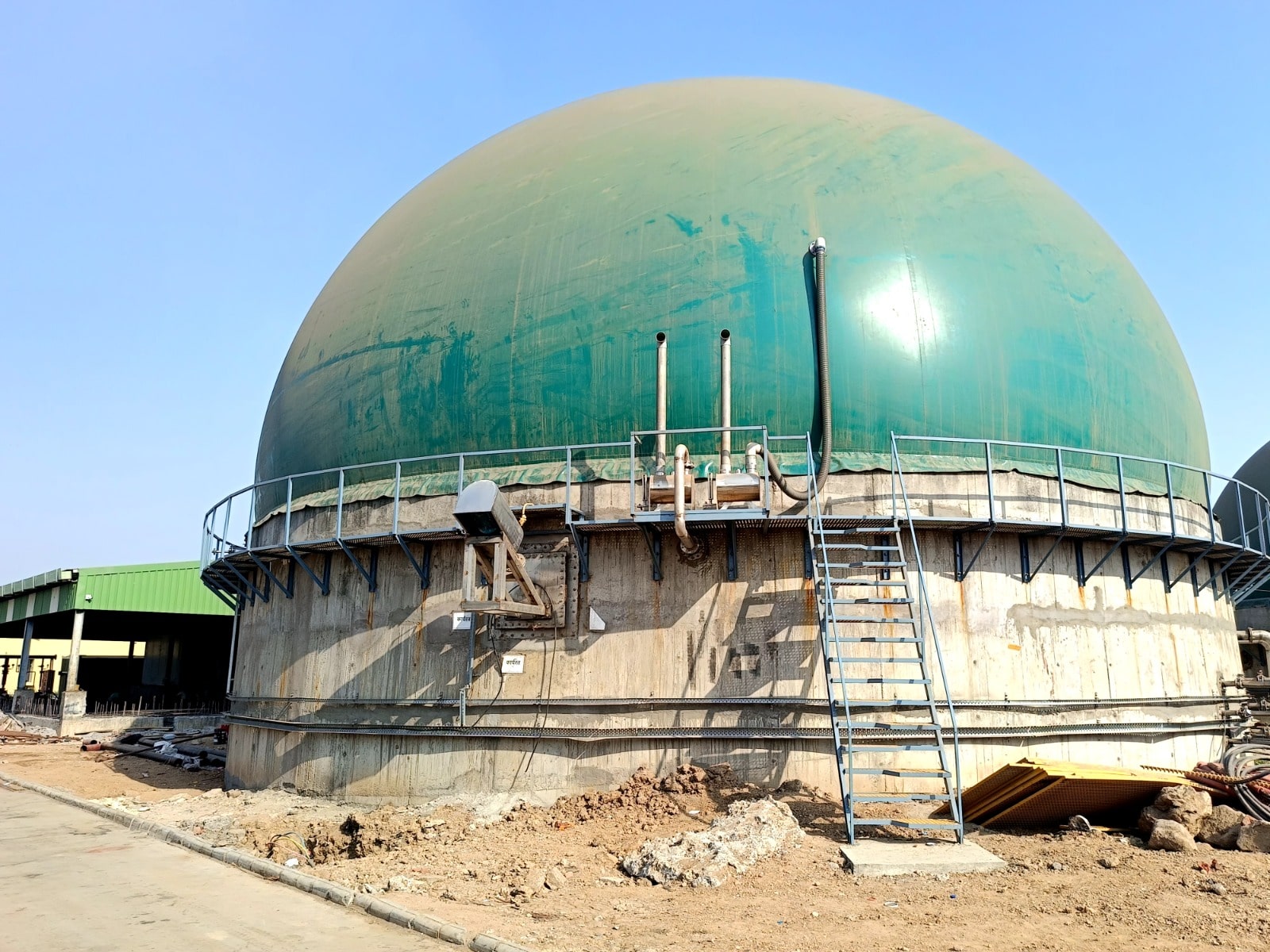
Bio-CNG gas upgrading and compression infrastructure

Purification that protects value

Gas quality is engineered—not assumed.

The upgrading train is selected around raw-gas composition, required recovery, product specification and the project’s operating economics.

01 / CONDITION

Moisture and H₂S management

Protect downstream equipment and media by stabilising gas before separation.

02 / SEPARATE

Integrated VPSA upgrading

Separate CO₂ and other impurities while targeting dependable methane recovery.

03 / VERIFY

Instrumented product quality

Analyse composition, dew point and operating parameters before compression and dispatch.

Project responsibility

From opportunity to operating asset.

A clear delivery pathway prevents gaps between civil works, process equipment, utilities, commissioning and long-term operations.

01 / DISCOVER

Feasibility

Feedstock, land, utilities, logistics, outputs and commercial constraints.

02 / DEFINE

Engineering

Process basis, mass balance, plant layout, equipment and project interfaces.

03 / DELIVER

Build & commission

Manufacturing, installation coordination, cold trials, inoculation and ramp-up.

04 / SUSTAIN

Operate & support

Training, monitoring, maintenance planning and performance improvement.

Project questions

Clarity before capital.

A technically credible project begins by resolving the decisions that control feedstock, land, output and operational responsibility.

What feedstocks can a Bio-CNG plant process?
Projects may use cattle dung, food waste, press mud, energy crops, segregated organic MSW and other biodegradable materials. The correct configuration depends on composition, contamination, seasonality and supply security.
Can Bio-CNG be used like conventional CNG?
When upgraded and compressed to the applicable product-gas specification, Bio-CNG is intended as a renewable substitute for conventional natural-gas applications. The final dispatch route and compliance basis must be defined for each project.
How is plant capacity selected?
Capacity should follow reliably available feedstock—not an optimistic headline quantity. Biofics evaluates daily volume, variability, storage, logistics, gas yield and the required operating days.
What does Biofics deliver?
Scope can cover feasibility, process engineering, equipment integration, manufacturing, purification, controls, commissioning, operator training and ongoing technical support, subject to the final contract.
What information is needed to start?
A project can begin with four inputs: feedstock type, approximate tonnes per day, site location or available land, and the intended gas or offtake route.

Start with a project screen

Is your Bio-CNG opportunity ready for engineering?

01 / FEEDSTOCKType, volume and seasonality
02 / LANDLocation, area and access
03 / UTILITIESPower, water and logistics
04 / OUTPUTOfftake, dispensing or captive use

Share what you know. Our team will help define what must be validated next.

Discuss your Bio-CNG project →
Scroll to Top